What Exactly Is a Union and How Does It Operate?
Unions present themselves as working for the benefit of their members, similar to a nonprofit organization, but they operate as businesses with significant overhead costs and bureaucratic structures. While charities typically spend 65-86% of their income directly on programs to help people, unions generally spend less than a third of their income on activities that directly benefit their members. The majority of union funds are spent on overhead expenses such as salaries, benefits, conventions, lobbying, supporting politicians, buildings, and other operational costs.
What happens when you join?
- Money will be deducted from your paycheck for the union to represent you. This is usually about 1-3 hours of pay per month.
- You will now be required to obey any of the rules listed in the Union constitution, and the local bylaws.
- You could be punished or fined for violating these rules.
Questions you may want to ask:
- How much will it actually cost to join the union- dues to the international and local, and any initiation fees? How likely will this go up, and how often?
- How will the money be spent that I pay to the union?
- What if I disagree with how the union spends its money or how it represents me? Can I get a refund?
Things you should know:
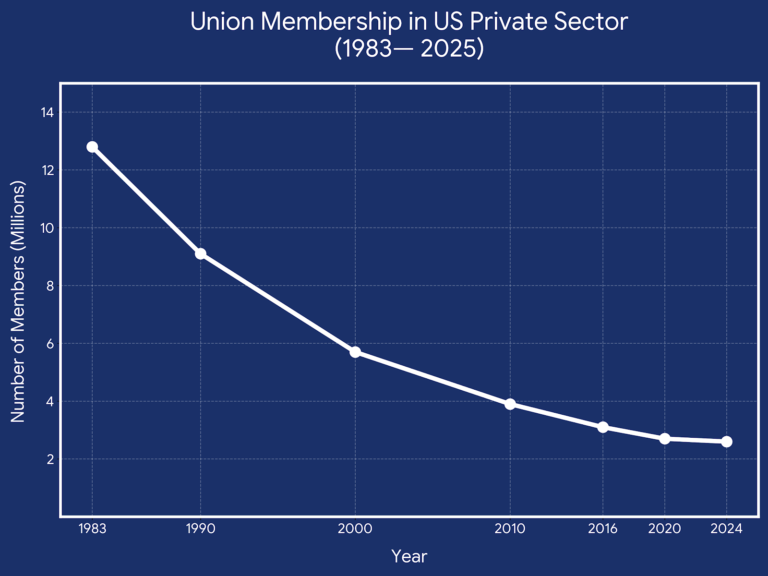
- Only a small percentage of private-sector employees (less than 6%) belong to a union, so most Americans have very little experience of what it means to be a member.
- You no longer have the right to speak directly with the company about your wages, benefits or working conditions.
- A union can promise almost anything to encourage you to vote for representation, but it has no obligation to uphold any promise other than it will participate in collective bargaining.
- The union gets the right to be present anytime you want to speak directly to management about your wages, benefits or working conditions (even if you don’t want them there).
Difficulty in removing unions: Once a union is voted in, it is very difficult to remove one. It may be 1 to 3 years before employees can even attempt to remove a union, and the process is complicated and expensive. By law, the company cannot help employees in this process, and unions usually fight aggressively to stay, sometimes even fining members who speak out against them.
In “Right to Work” states, you cannot be forced to join or pay dues to a union as a non-member, even if your company is unionized. However, the union still represents all employees in the bargaining unit, and non-members are still required to follow the union contract while losing the right to run for union office or vote on their labor contract. Non-members may also face pressure or negative labels like “free-loaders” or “scabs” from union officials.