Are There Any Risks Involved in Collective Bargaining?
Collective bargaining is the process where the union, acting as your exclusive representative, negotiates with the company on matters concerning your wages, hours, and terms and conditions of employment. These are the only issues that are required to be addressed by the union and the company.
What happens in collective bargaining?
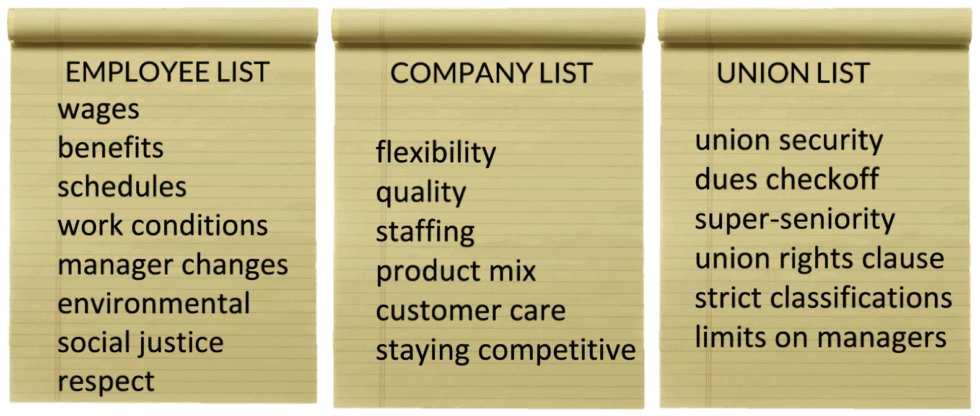
There are three lists of “things we want” in collective bargaining:
- The employees have a list of what they hope to achieve, and this list often includes things that the union and company are not required to bargain over.
- The company has a list of what it believes it must have to operate efficiently and manage the business to remain competitive and continue to provide good jobs.
- The union brings a list of things it wants to have to make it easier to run the union, which have no bearing on the wages, benefits or working conditions of the employees.
In bargaining, the union speaks exclusively for the employees. You can no longer negotiate directly with the company.
Questions you should want answered about what you can expect in the collective bargaining process:
- How will the bargaining issues be prioritized?
- Is it likely things like social issues, getting rid of poor supervisors, and respect will be addressed?
- How long will it take to have a contract in place?
- What happens if I don’t like the contract negotiated?
Things you should know:
- With collective bargaining, you could end up with more, but you could also stay the same or end up with less, and still pay union dues.
- It may be a long time before there is a contract – on average it takes over 465 days to reach a first contract.
- There might not be a contract at all. More than half the time (53%), a contract is never reached.
- If the union presents you with a contract you don’t like, you may have only two options: accept the contract, or vote to go on strike.
Final thought:
The eventual contract is between the union and the company, written about you, but not necessarily by or for you. The union may even agree to reduce what employees currently receive in order to get things on its own priority list.
Excerpts from Government Documents
“Collective Bargaining is potentially hazardous for employees and as a result of such negotiations, employees could wind up with less benefits after unionization than before.”
COACH & EQUIPMENT SALES CORP., 228 NLRB No. 51
“Employees understand that a union cannot obtain increased benefits just by winning an election, but that benefits must be obtained through collective bargaining.”
BURNS INTERNATIONAL SECURITY SERVICES, 256 NLRB NO. 165